Skills for everyday life and play
Occupational Therapy
Helping children take part in the everyday activities of childhood — play, self-care, learning and sensory regulation.
In plain language
Occupational therapy helps children take part in the ‘occupations’ of childhood — playing, dressing, eating, writing, learning and managing sensory experiences. Therapists build the underlying skills a child needs to participate and feel comfortable.
Areas we work on
- Fine-motor and hand skills
- Self-care and daily-living skills
- Sensory regulation
- Attention and organisation
- Play and participation
What a session may involve
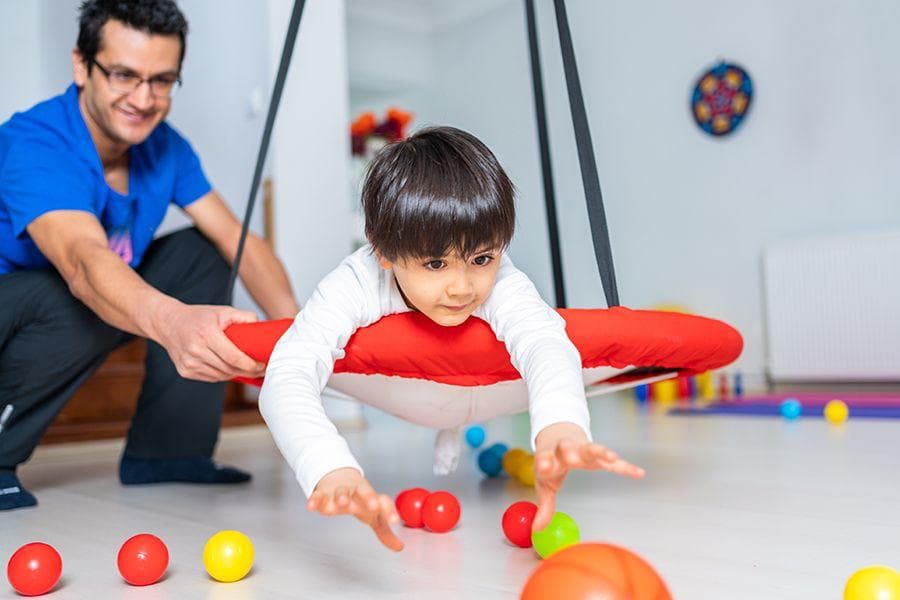
Sessions use purposeful play and practical activities, often in a sensory-friendly space, to build skills your child can use at home and school.
- Fine-motor and pre-writing play
- Sensory-regulation activities
- Self-care skills practice
- Coordination and balance games
Working with your family
We suggest sensory-friendly routines and practical adaptations you can use at home and share with school.
How we review progress
Goals focus on everyday participation and are reviewed with you regularly.
Common questions
Occupational therapy focuses on everyday activities such as play, self-care, fine-motor skills and sensory regulation. Physical therapy focuses more on gross-motor skills, movement, strength and mobility. The two often work closely together.
These are small changes to daily routines and environments that help a child feel calm and regulated, making it easier to learn and take part.